
bike speedometers have also come a long way. The speedometer used in the past and the current speedometer are completely different.
Nonetheless, there are advantages to the wire speedometers of the past. Let’s take a look at the pros and cons of each speedometer.
It’s good to think of bike speedometers as “wired speedometer” / “wireless speedometer” / “GPS speedometer” / “smartphone speedometer”.
I think it would be nice to think about what each one is and which one is right for you.
한국어 : (Link) / english : (Link)
Table of Contents
wired speedometer
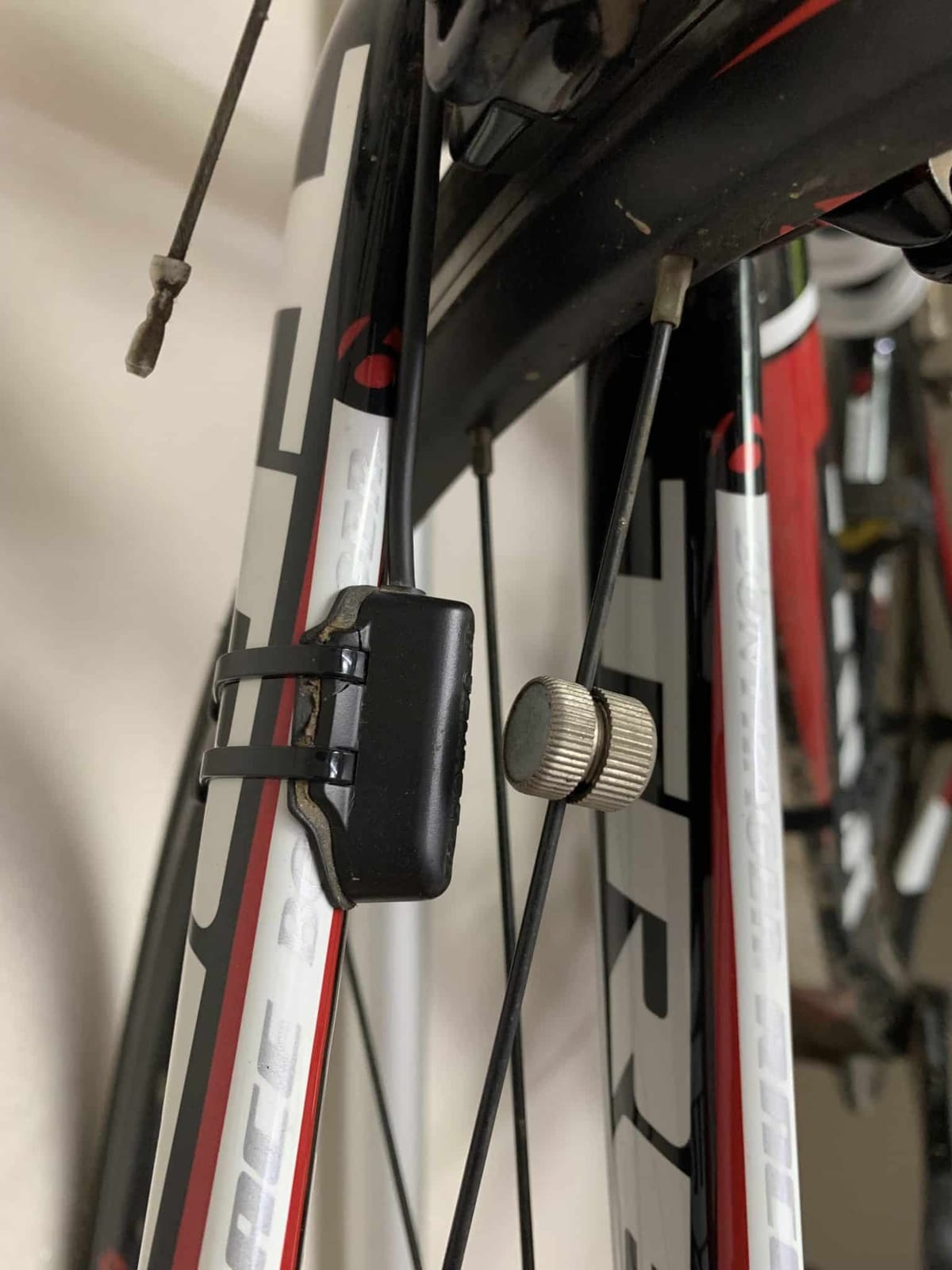
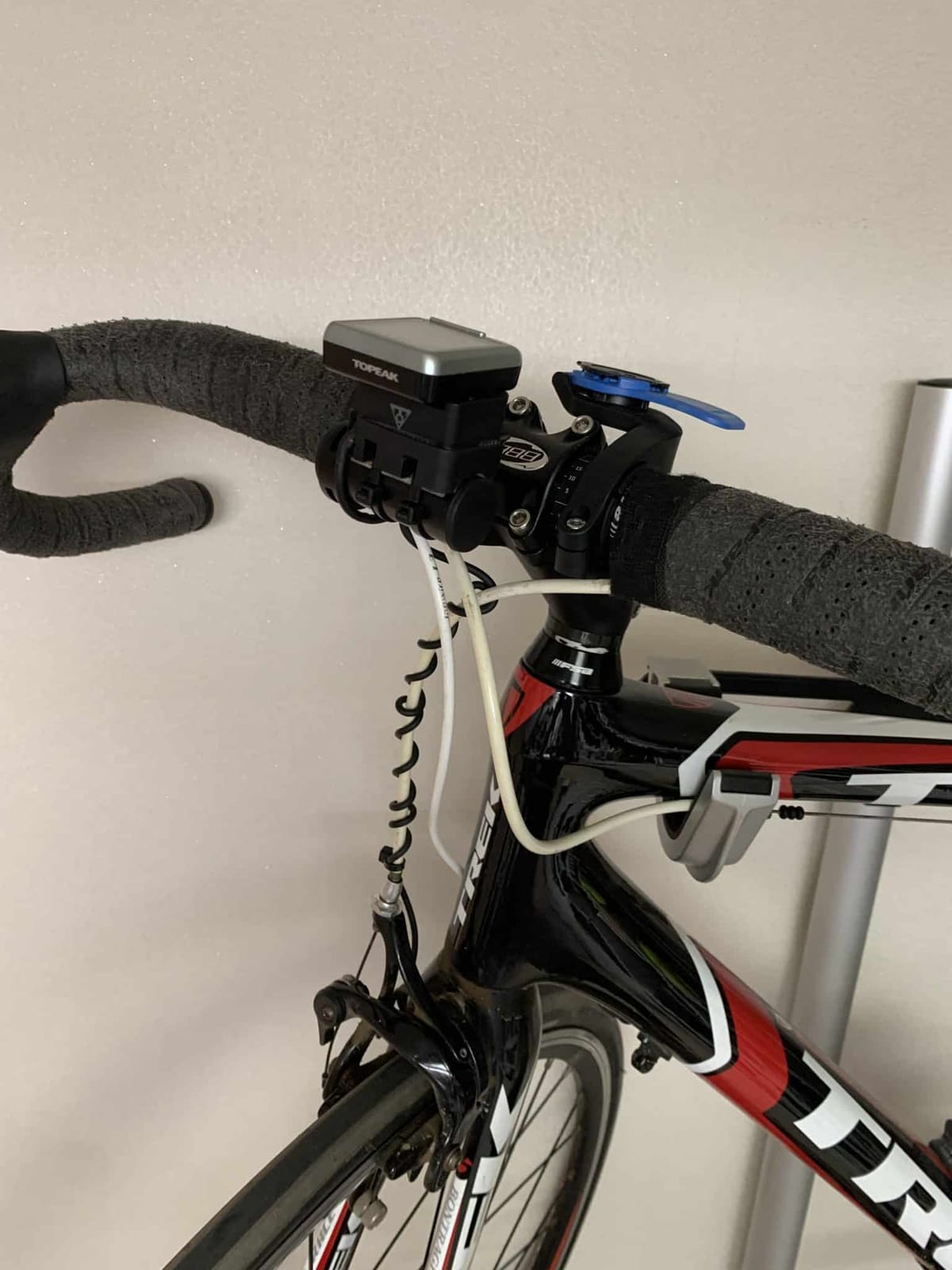
Wired speedometers measure the number of times a wheel rotates.
That’s why there’s a magnet attached to the spokes of a bike wheel. A sensor is attached to the frame (fork).
A magnetic sensor attached to the wheel generates a signal each time it rotates.
This signal is passed to the speedometer, which calculates the signal and displays the bike’s current speed.
Because they are mechanically operated, bike wired speedometers are relatively simple, reliable, and long battery life speed measurement tools.
However, installation and maintenance can be a bit complicated as cabling is required.
wireless speedometer
Wireless speedometers can be divided into two categories.
The first is a wired speedometer like the one above that only removes wires (past general wireless speedometer), and the other is a method using a gyroscope (latest wireless speedometer).
General wireless speedometer in the past
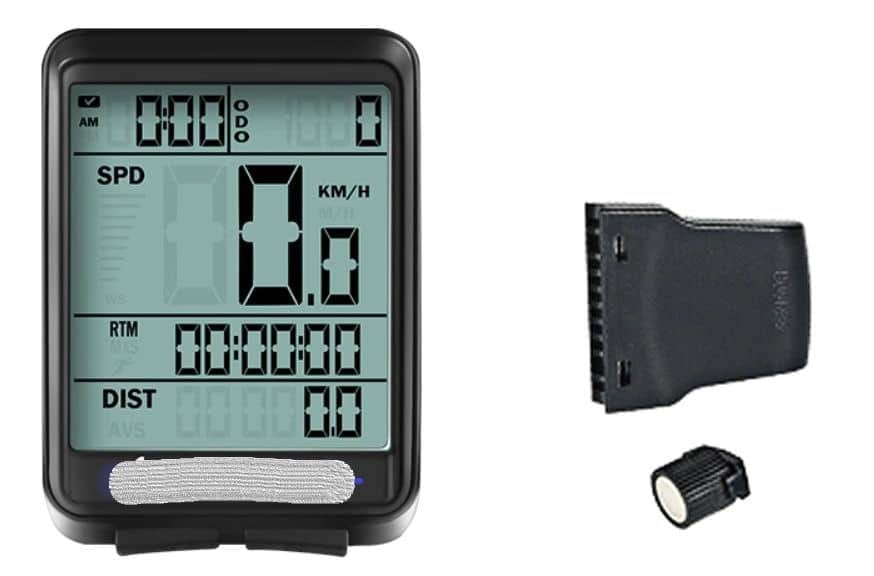
The old wireless speedometers were just the wires removed from wired speedometers.
These products do not have wires, so they display the speed through wireless signal transmission. A lot of signal interference occurs during this signal transmission process.
So, if you use this speedometer when running at night with the lights on, there will be speed errors due to signal interference. Riding distance is also a problem.
In addition, this method has the inconvenience of having to change the battery in both the computer (display) and sensor because the battery goes into the sensor.
The only plus is that there are no wires.
gyroscope wireless speedometer
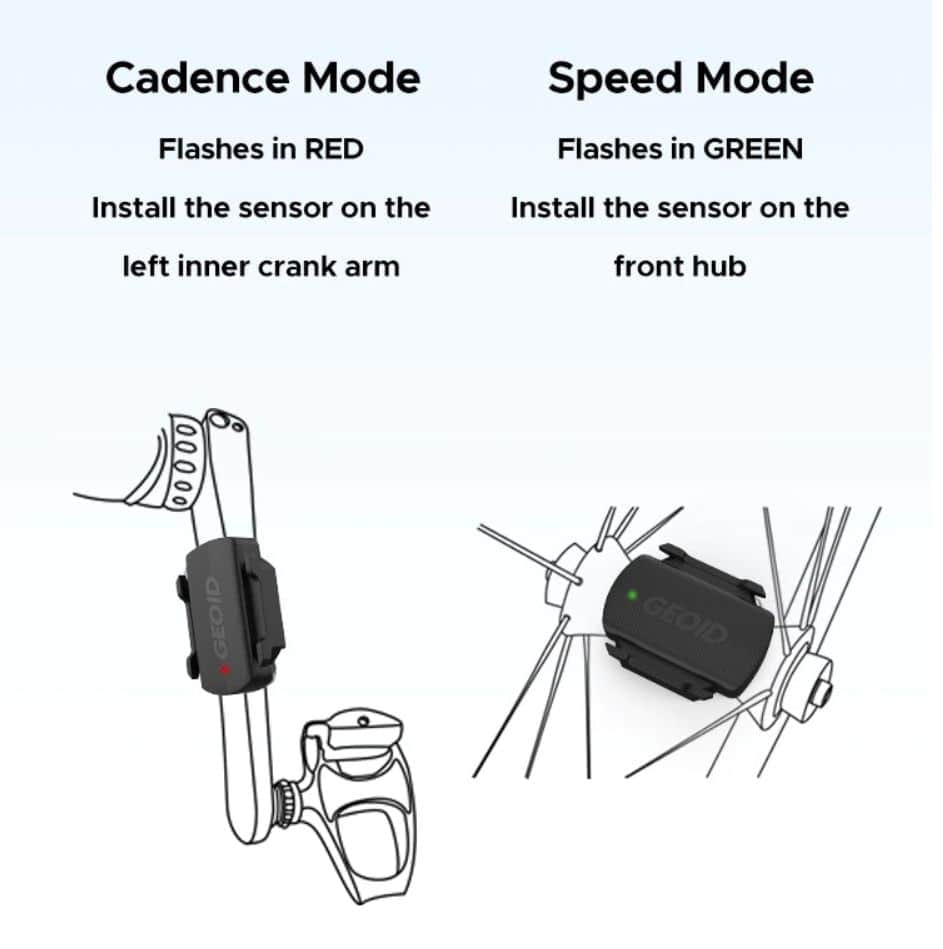
A gyroscopic wireless speedometer is a tool that measures the speed of a bike without using a Global Positioning System (GPS). These wireless speedometers mainly use accelerometers and gyroscopes to measure speed.
An accelerometer is a sensor that detects the bike’s acceleration. Speed is calculated by measuring the acceleration that occurs when the bike accelerates or decelerates. A gyroscope is a sensor that detects the rotational speed of a bike. It calculates the speed by measuring the angular velocity according to the rotation of the bike.
A wireless speedometer displays your speed by attaching a sensor to a key part of your bike and transmitting data wirelessly. These speedometers work by connecting to a smartphone or bike speedometer computer, usually via Bluetooth or antenna. Users can check speed and other information from connected devices.
Wireless speedometers are smaller, easier to attach to your bike, and can provide accurate speed measurements even in areas with weak GPS signals. Also, the battery life may be longer because the GPS function is not required. However, due to the use of accelerometers and gyroscopes, accurate measurements can be difficult at constant speeds without acceleration or rotation.
gps speedometer
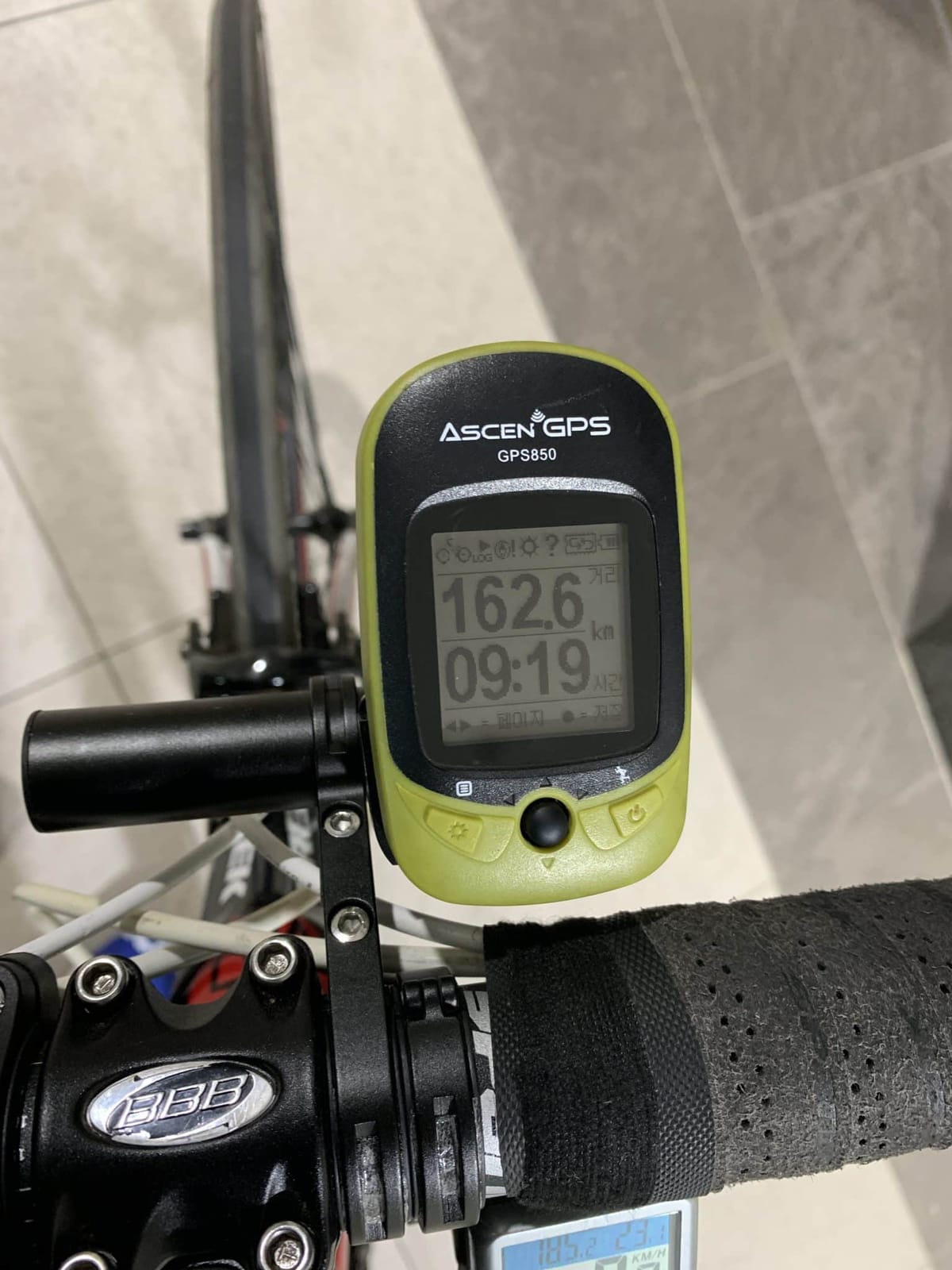
A GPS speedometer is a bike speedometer that utilizes GPS (Global Positioning System) signals. Since GPS provides location information through a network of satellites, a GPS speedometer uses satellite signals to measure the bike’s speed.
A GPS receiver calculates speed by receiving satellite signals and measuring the distance to those satellites. Speed is calculated as the rate of change of position over time, which the GPS speedometer displays to the user.
A GPS speedometer is convenient because it can measure speed only with GPS signals without the need to attach additional equipment or sensors to the bike. Also, because GPS technology is relatively accurate and stable, it generally provides reliable speed measurements.
However, it is important to note that accuracy may be reduced in environments where GPS signals are not properly received or in terrain where the location is obscured by tall buildings or trees. Also, since a GPS speedometer needs to receive a signal, the strength and stability of the signal may be affected.
And because it uses a lot of battery, be sure to charge the battery after one or two rides.
In general (depending on the device), GPS speedometers, in addition to speed, also have a navigation feature that stores a GPS log to help you follow routes not taken. – It’s the biggest reason I use a GPS speedometer.
smartphone speedometer
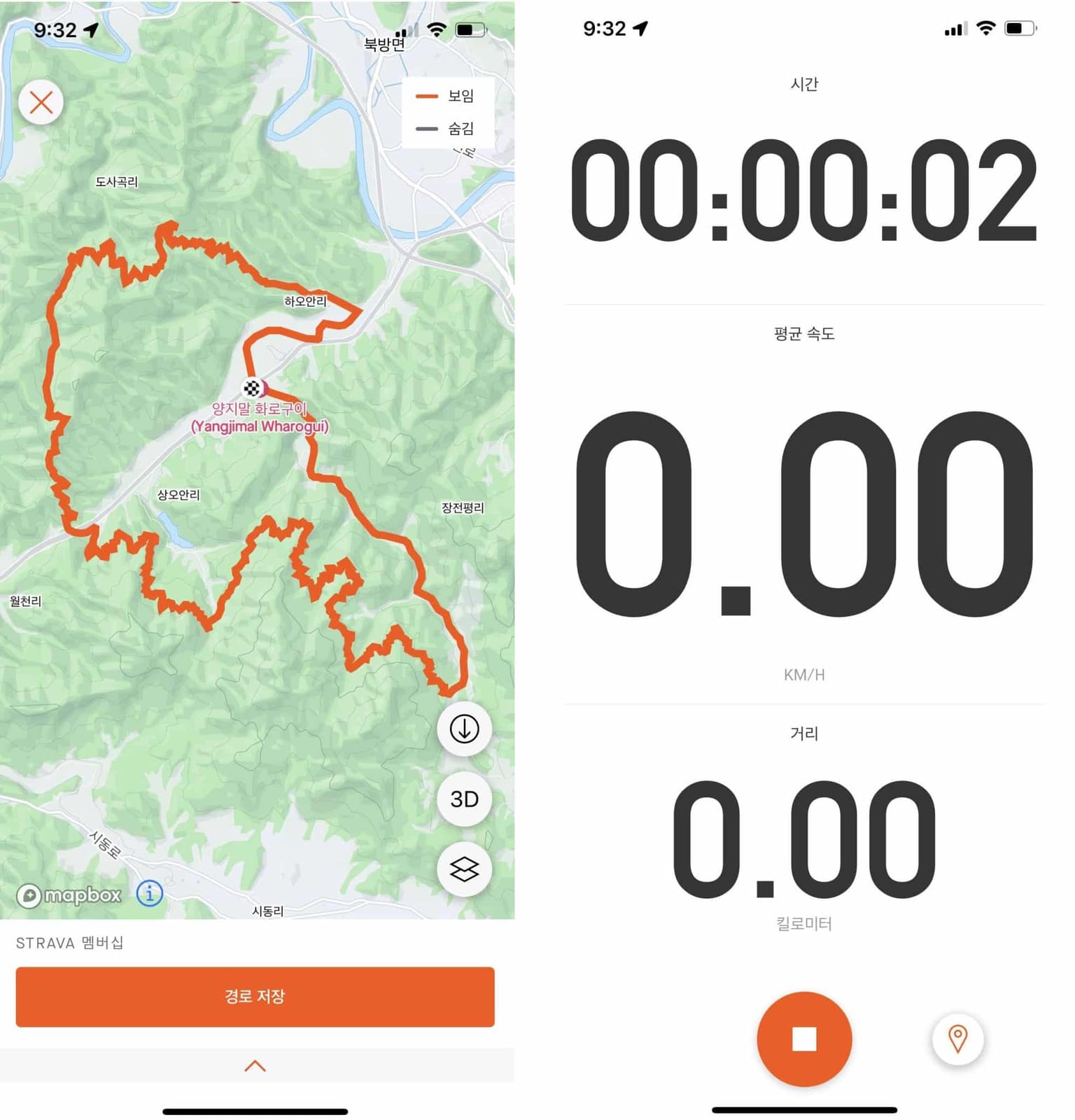
요즘에는 “스트라바” 라는 앱을 사용하여 스마트폰으로 라이딩 로그를 기록 하기도 합니다. 속도계로 사용하기도 하지요.
“스트라바” 외에도 속도 측정해주는 GPS 속도계가 앱으로 출시 되어있습니다.
스마트폰의 GPS 기능을 활용하면, 내장된 GPS 수신기를 통해 위치 정보를 추적하고 이를 기반으로 속도를 계산할 수 있습니다. 자전거를 타고 이동하는 동안 스마트폰을 자전거에 고정하거나 가방에 넣고 사용하면 됩니다.
스마트폰 앱 중에는 전용 자전거 속도계 앱도 있지만, “스트라바” 와 같이 GPS 기능을 활용하는 맵 앱이나 운동 추적 앱 등도 속도 측정 기능을 제공할 수 있습니다. 이러한 앱들은 GPS 신호를 사용하여 위치와 속도 정보를 수집하고, 시각적으로 사용자에게 표시합니다.
스마트폰을 이용한 속도계는 휴대성과 편리성이 뛰어나며, 추가적인 장비나 센서 없이도 사용할 수 있습니다. 다만, GPS 신호의 강도와 안정성에 따라 정확도가 달라질 수 있으므로, 실내나 GPS 신호가 약한 지역에서는 정확성에 주의해야 합니다.
conclusion
I used to use only a wired speedometer as a very old bike speedometer. The wireless speedometer was not used because of signal interference.
Then, I also used a gyroscope-type wireless speedometer, but I didn’t use it because I felt that the speed came out a little strange.
In my case, I use three things recently: a GPS speedometer, a wired speedometer, and a smartphone speedometer.
There are often people who say that the GPS speedometer has a lot of errors or bounces, but the ASCEN GPS (Link) I use has never had a GPS error, probably because it is a product of a company specializing in GPS.
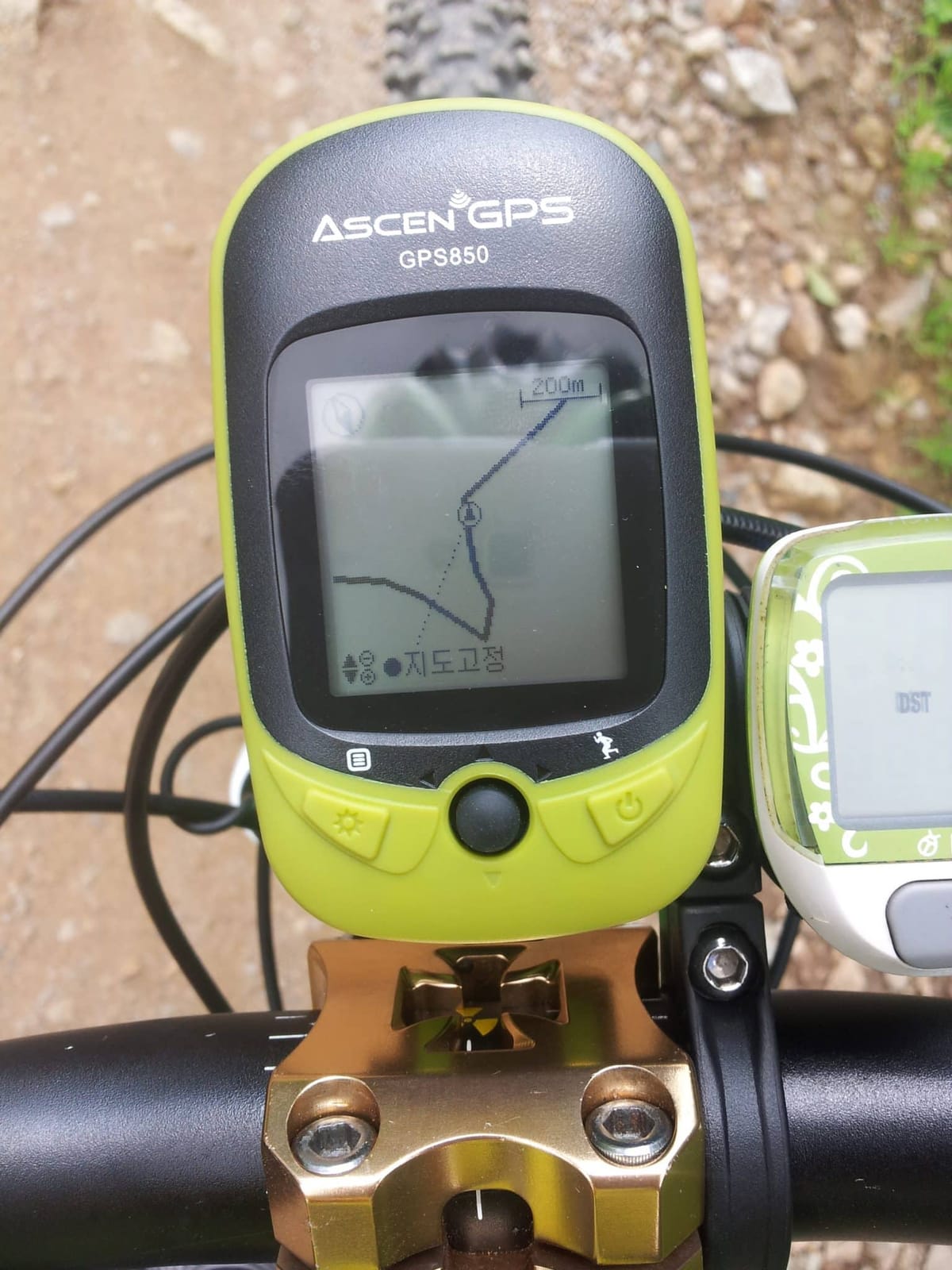
A speedometer is meaningless on a mountain bike because you don’t need to know your current speed. Instead, it is important how many kilometers the riding distance is and how far you have come in the riding log. And when there is something to track other logs, the function to save and follow the GPS is meaningful.
In addition, it is ridiculous to mount a smartphone on a ride that has a lot of impact from up, down, left, and right, such as on a mountain bike.
So when I ride a mountain bike, I ride with only a GPS speedometer.
This GPS speedometer also has a navigation function to view and follow other people’s saved logs.
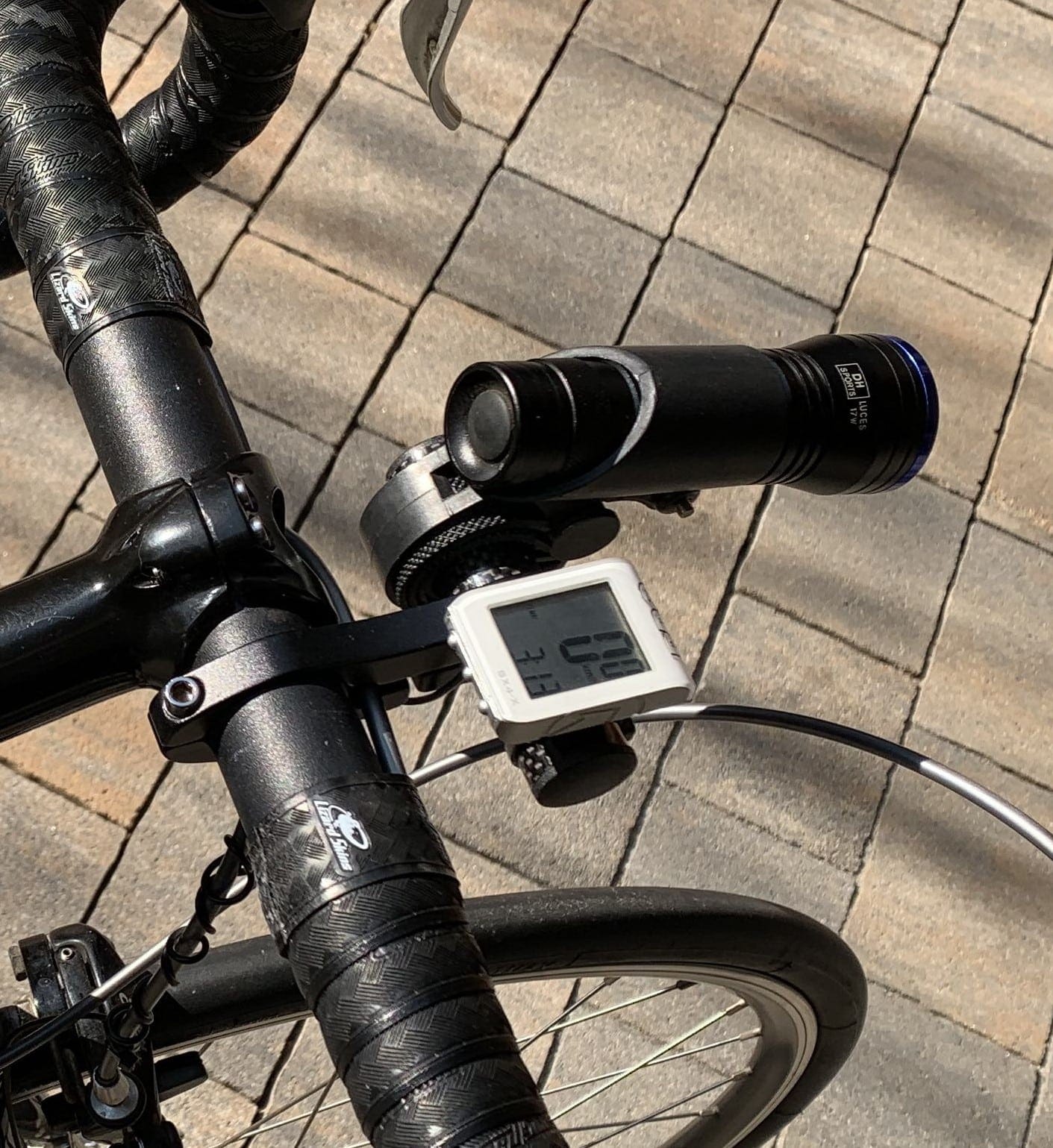
A wired speedometer is standard on road bikes. It’s a movement that I’m curious about the current speed.
I only ride with a GPS speedometer on long rides.
Recently, I’m trying to use “strava”, so I often try to ride with my smartphone.
In this way, the measurement tool is different depending on the riding. However, wireless speedometers are not recommended.
Please refer to it and put on a speedometer that suits you well.