
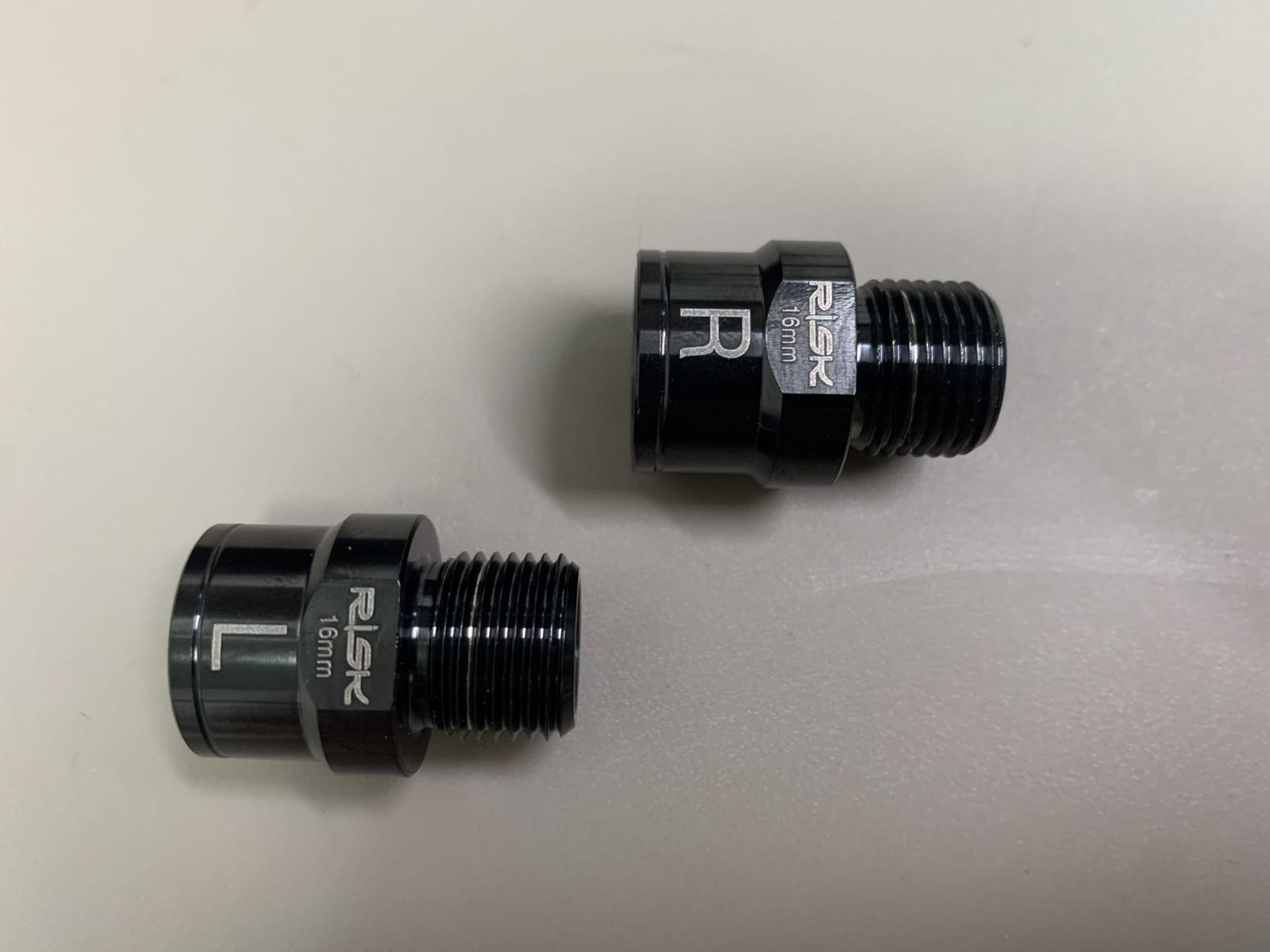
When I was riding a bike in good health, I didn’t know why it was necessary to widen the width of the pedals by using a part called a pedal extender. There was no need to know anything about the width of the pedals.
As for the width of the pedals, I just thought “Narrow is better – because it’s the closest to the gait and has the least air resistance.”
However, after severely injuring the ITB ligament in the fall of 2020, I became more interested in fitting.
Before getting injured, I was very interested in the difference in geometry of the bike, but since it hurts, I’m looking for a fitting.
So I went to a fitting company and got a fitting.
At the same time, I came to think that it is not good to have a narrow pedal width.
And because the calves are crooked legs, there were more things to worry about.
I’m going to talk about the process of finding the right pedal width.
한국어 : (Link) / english : (Link)
Table of Contents
What is a Pedal Extender?
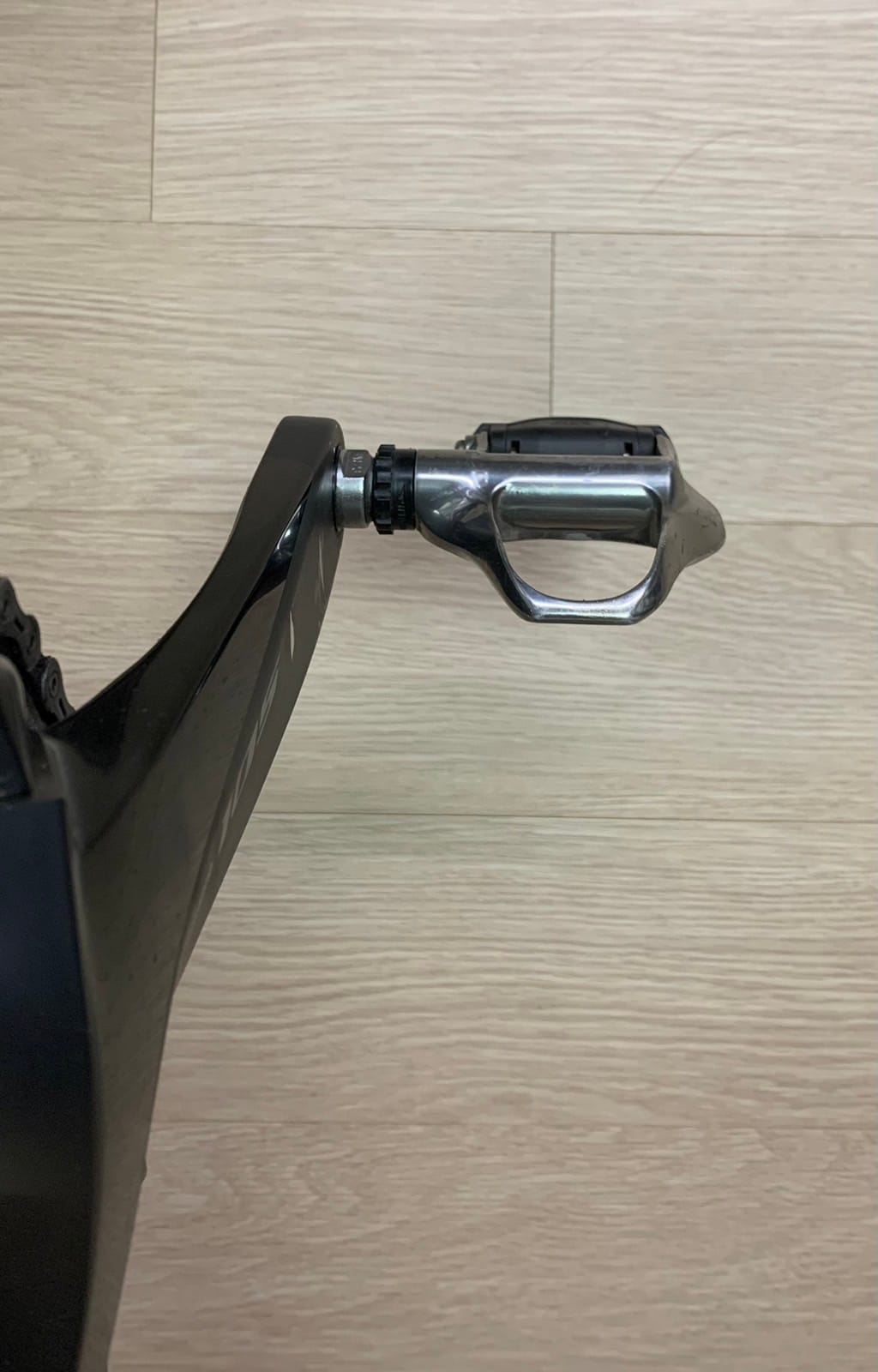
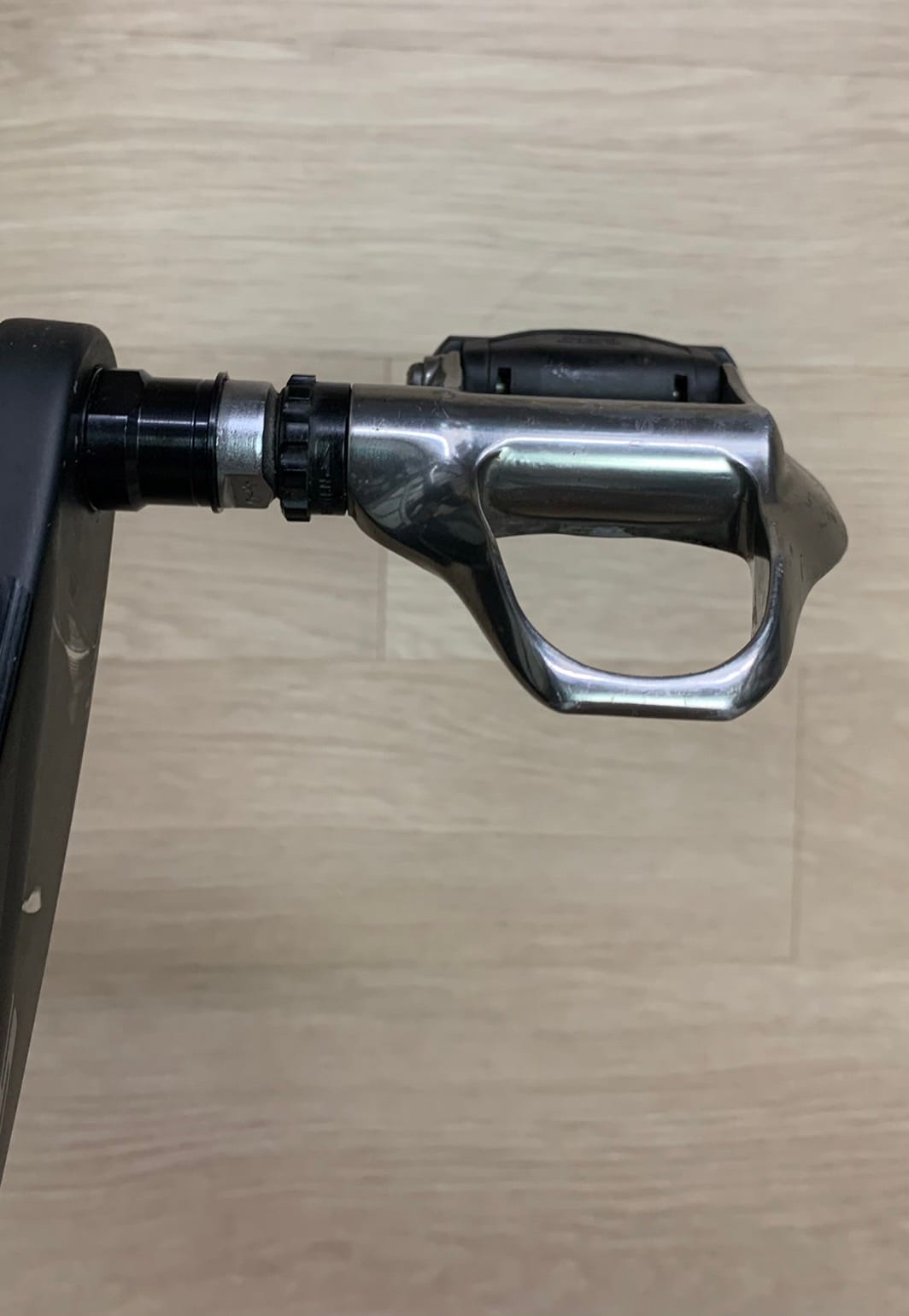
A pedal extender is a product that moves the pedals of a bicycle away from the bicycle.
Theoretically, the closer the pedals are to the bike, the better.
This will reduce air resistance and eliminate power loss.
However, in some special situations it may be better to use a pedal extender.
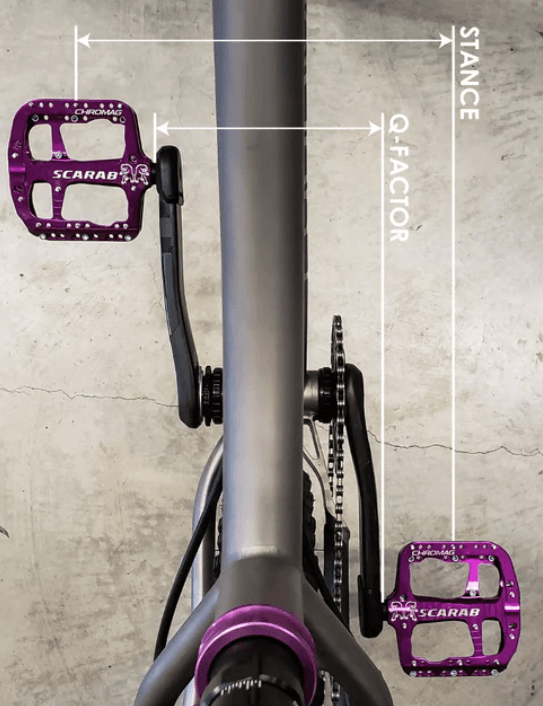
Let me throw out a question.
When measuring distances from pedals and bicycles in MTB and road bikes, is the distance the same?
no. MTB and road bikes have different pedal distances. The measured value of this part is called “Q-Factor”.
(Exactly, the distance to the part where the pedal is inserted)
The pedals on a road bike are much closer to the bike. Roughly 15mm per side is close.
So which one would be the right position?
There is no right answer. Each person’s skeleton is different, and it is different due to various factors such as muscles and flexibility.
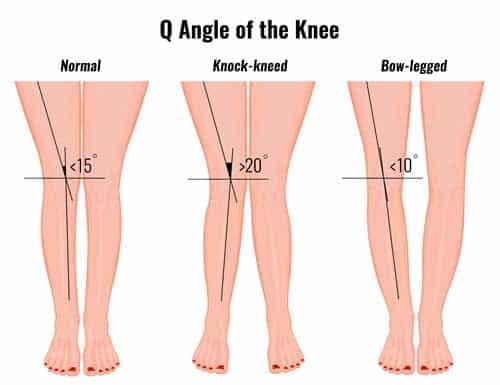
However, it is usually known that the left and right positions of the pedals are determined based on the pelvic bones, and additionally, they are set differently according to the angle at which the legs are located in the pelvis (Q-Angle).
(It also depends on whether it is “O-legged” or “X-legged”)
Why?
This is because the power to press the pedals is most efficient when the pelvis, knees, and feet are in a straight line.
This is because pressing at an angle that is not vertical wastes force and causes pain.
Q-Factor – Road Bikes and Mountain Bikes
The Q-factor of a road bike is around 150mm.
(Source: SHIMANO 105 HOLLOWTECH II Crankset 2×12-speed )
The Q-factor of a mountain bike is around 180mm.
(Source: SLX HOLLOWTECH II MTB Crankset 178 mm Q-Factor 1×12-speed)
So, if you put 15mm pedal extenders on both sides,
The distance between the feet of the mountain bike and the road bike is the same.
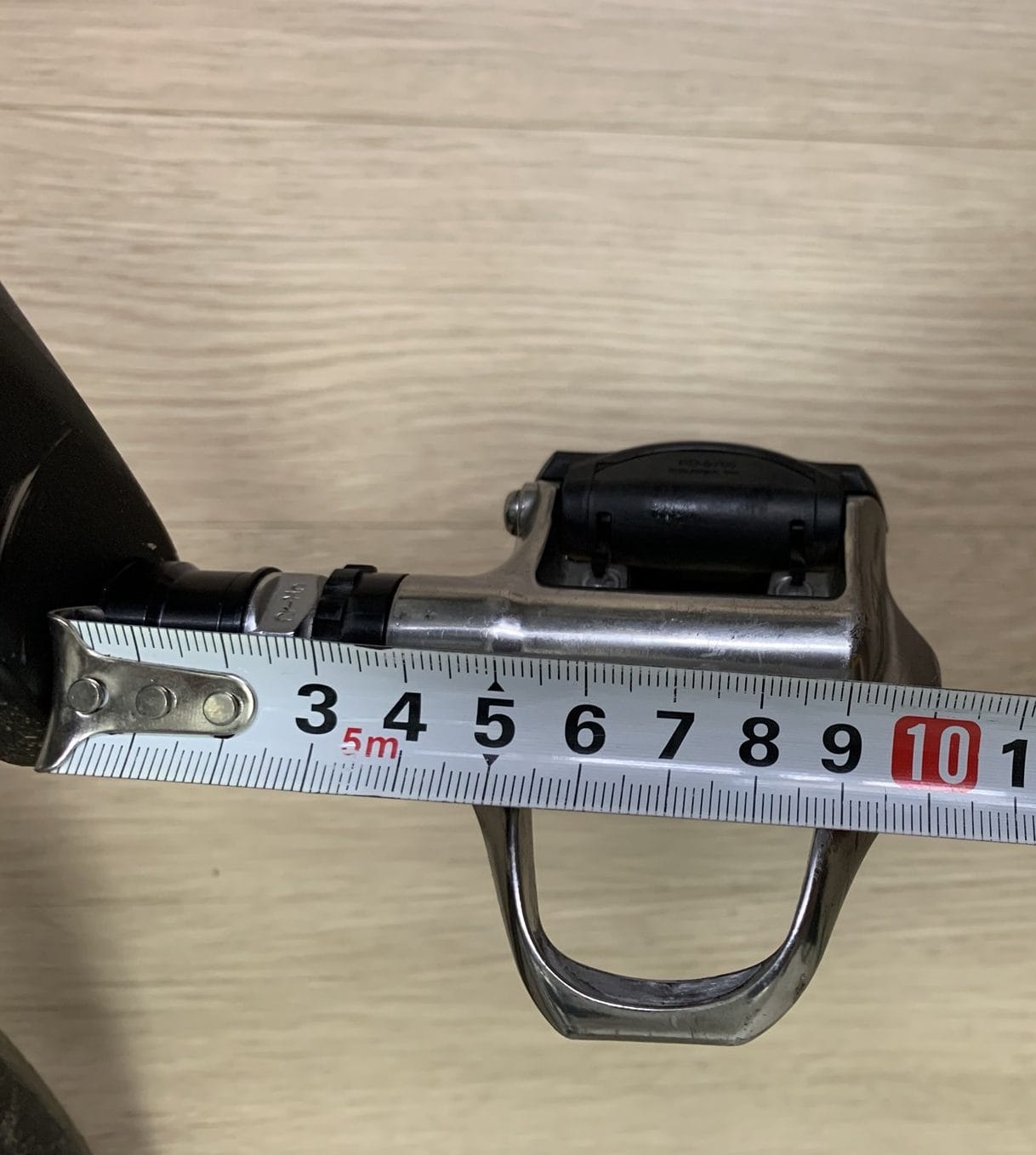
I thought 290mm was suitable for me as the distance between the pedals.
So, taking the case of a road bike as an example, 150 + 70 * 2 would be 290mm.
With this calculation, I tried attaching a pedal extender.
What about mountain bikes?
Since the Q-factor is 180, each pedal is 55mm, so 180 + 55 * 2 = 290mm.
Is the position of the pedals the same for a mountain bike without extenders and a road bike with 16mm extenders?
How to properly fit a bowleg?
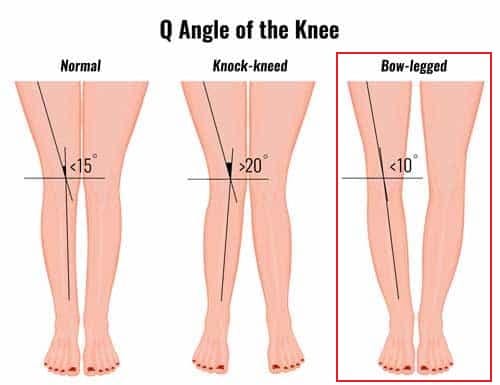
I have very bowleg . This is the case on the right in the image above.
If you’re a bowleg like me, the narrower the pedals, the more your knees and feet move away from vertical.
The wider the pedal, the closer it gets to vertical.
If you think about it, bowleg seems to be easier to solve. I don’t think it’s easy to solve the problem if it’s an X-leg. I’m not a fitter and I’m not X-legged, so I’d better not comment on how an X-legged person might go about solving this problem.
However, what I feel when I ride a road bike with a narrow pedal width, as I am a bowleg and have a wide pelvis, is that the blade side of my foot (little toe side) is pointing downward. And then I feel my knees go out. The more power you give it, the more so.
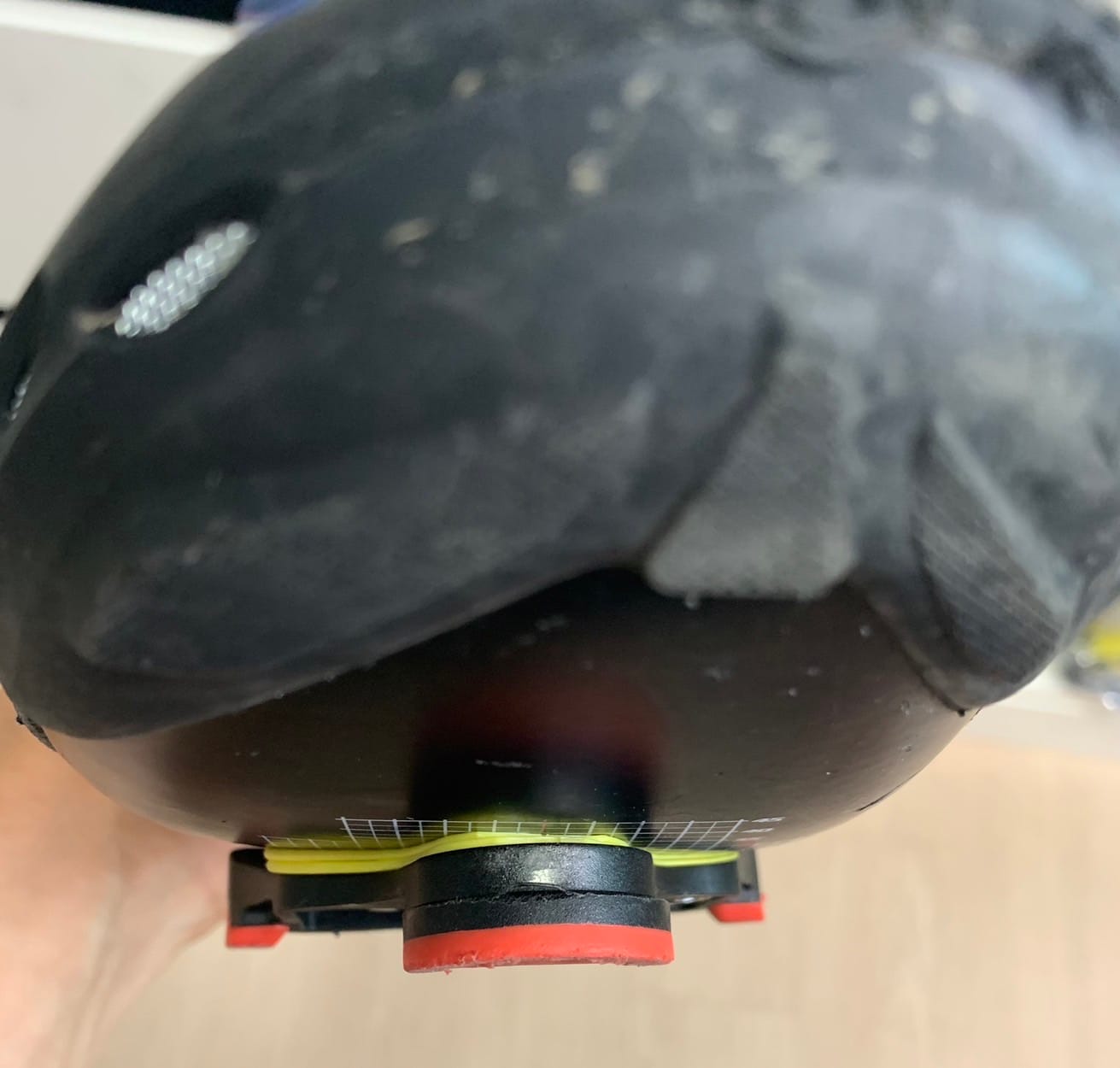
So the first thing I tried was the cleat wedge. It was an attempt to get rid of the feeling of the feet tipping outward, and it was quite successful.
After putting in 2 wedges, I felt that the soles of my feet were level.
However, even with this setting, the knees were not comfortable if I applied too much force.
So I tried attaching a pedal extender. After adding pedal extenders and wedges, I felt that my knees were much more comfortable.
Find the right Q-Factor
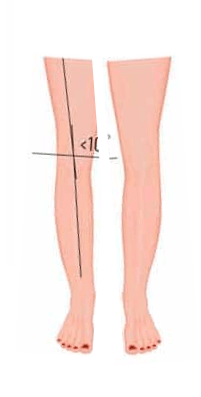
If you stand up, put your feet together, and drop the weight vertically across your pelvis, knees, and feet, your feet will of course be narrower and your pelvis will be wider.
(This picture shows the legs of the bowleg above slightly spread.)
Spread your legs little by little and find the point where your pelvis, knees, and feet are close to vertical. As you adjust the width of your feet, the width of your feet where your pelvis, knees, and feet are perpendicular to the vertical line as much as possible should be the width of your pedal.
Then we have a distance of 55mm per pedal, so in my example, 290mm is the appropriate pedal width and 55mm long per pedal, so 290mm – (2*55mm) = 180mm.
It’s pretty much the same as the normal Q-Factor on mountain bikes.
After this calculation came out, the question of the past was resolved.
I’ve been riding mostly mountain bikes for 20 years and never got sick, but the reason why I got sick after riding hard on road bikes.
So, even for road bikes, I ignore efficiency and air resistance, and just ride with the same settings as MTB.
Of course, if you listen to the players, they say that road bikes have completely different pedaling methods, so you shouldn’t do the same settings. They say that the way they use power is different. However, I made this choice because I didn’t have the time or the desire to be so immersed in road bikes.
One more thing can be seen from the picture above. When you spread your legs apart, the soles of your feet face outward.
So, even if the bottom of the shoe is completely horizontal, it causes the feeling that the foot is tilted outward when the foot is spread apart. In this situation, what would happen if the feet were perfectly level and the ankles were angled left and right? Your knee will be pushed out.
A wedge was also needed to prevent this phenomenon.
Some shoes have the foot deliberately tilted outward.
Some manufacturers intentionally tilt the foot outward.
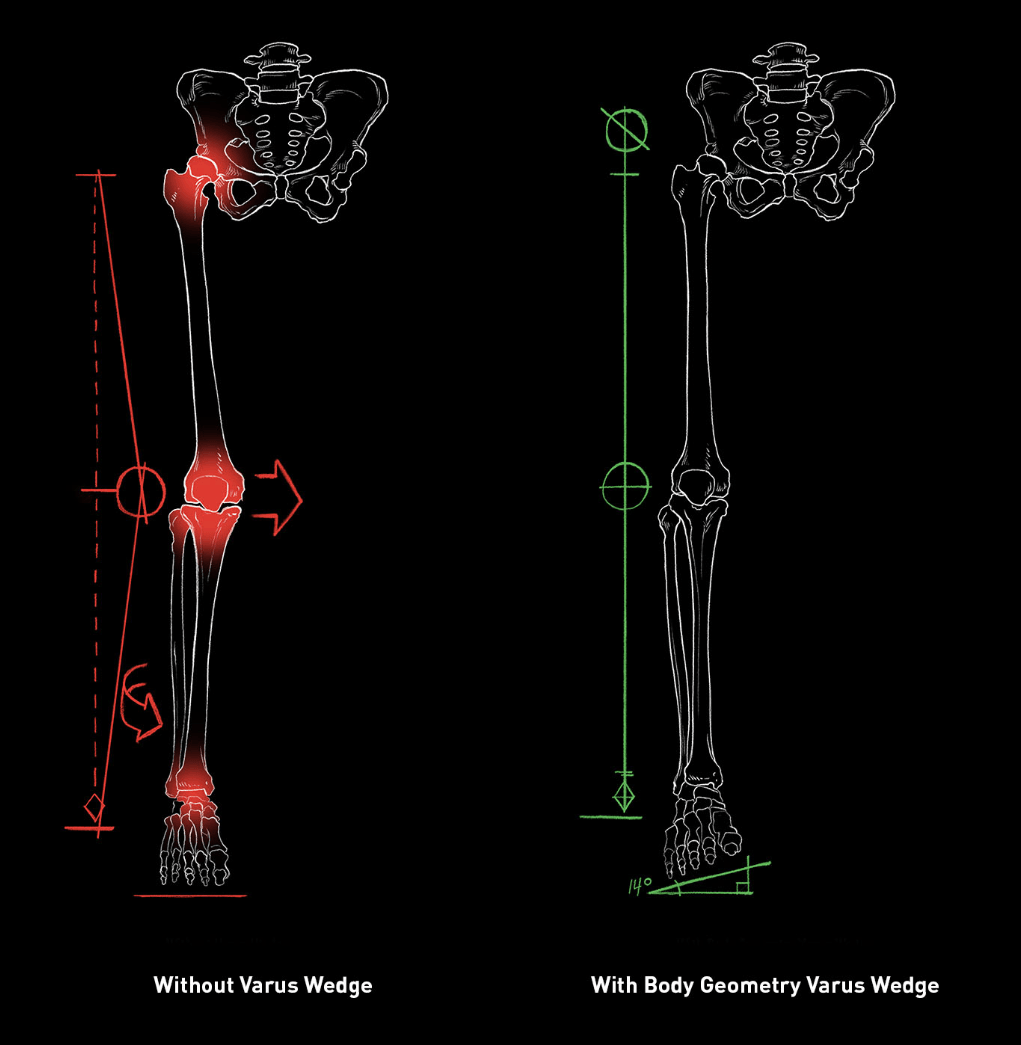
Source : Body Geometry Innovation | Specialized.com
It was created based on the theory that if the foot is tilted outward, in the case of X-legged people, the knee does not fall inward and is supported. I think this is the worst setup for bowleg people.
If the bowleg, where the knee goes out, wears these shoes, the knee goes out more and causes pain.
One of the shoes I own has one that leans out like this. Even the slightest tilt is enough to be felt and cause pain.
Pedal extender purchased from AliExpress
I bought it on Ali Express.
Most of them came in 16mm or 20mm length, so I bought the 20mm and then bought the 16mm from another company.
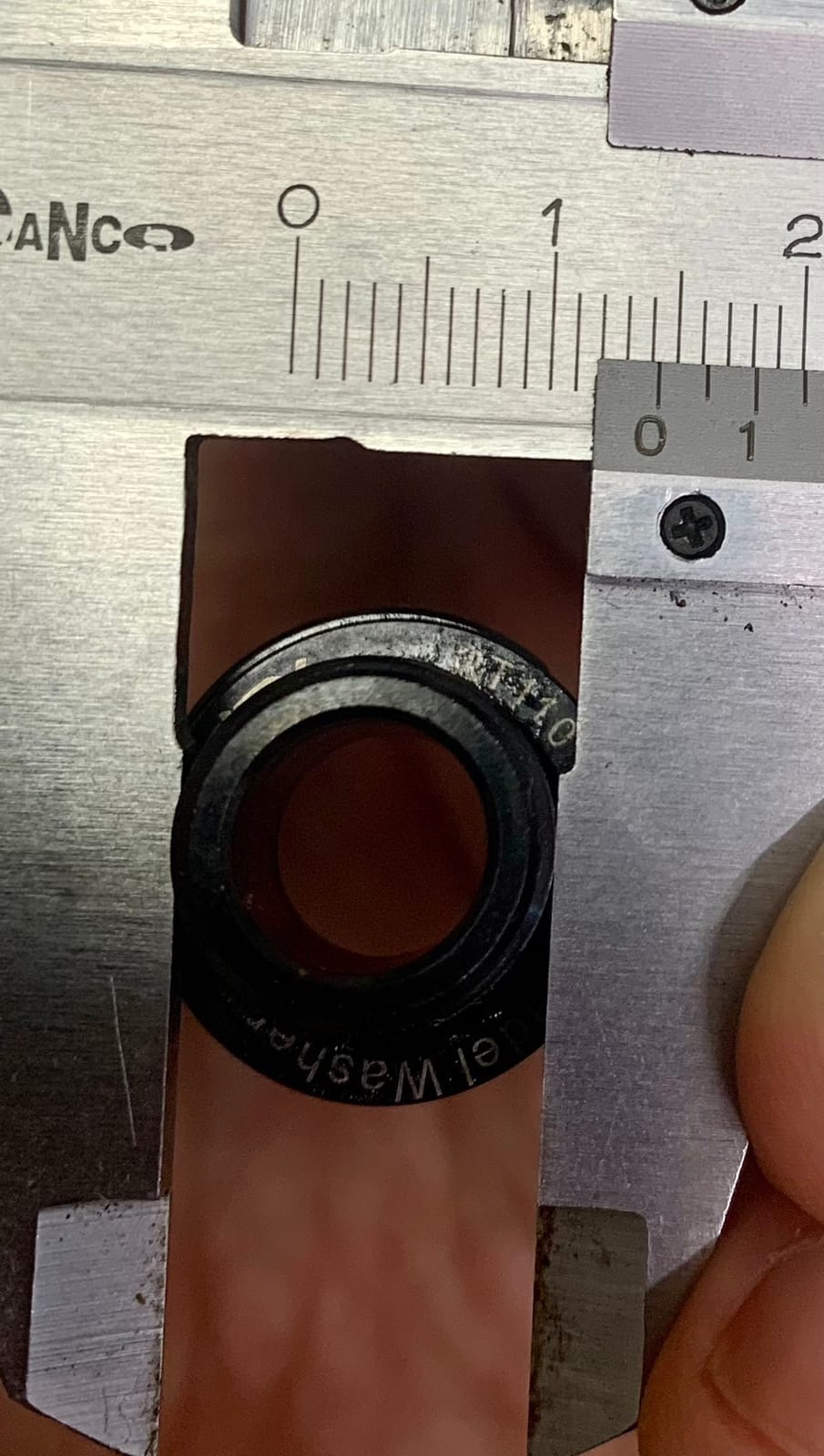
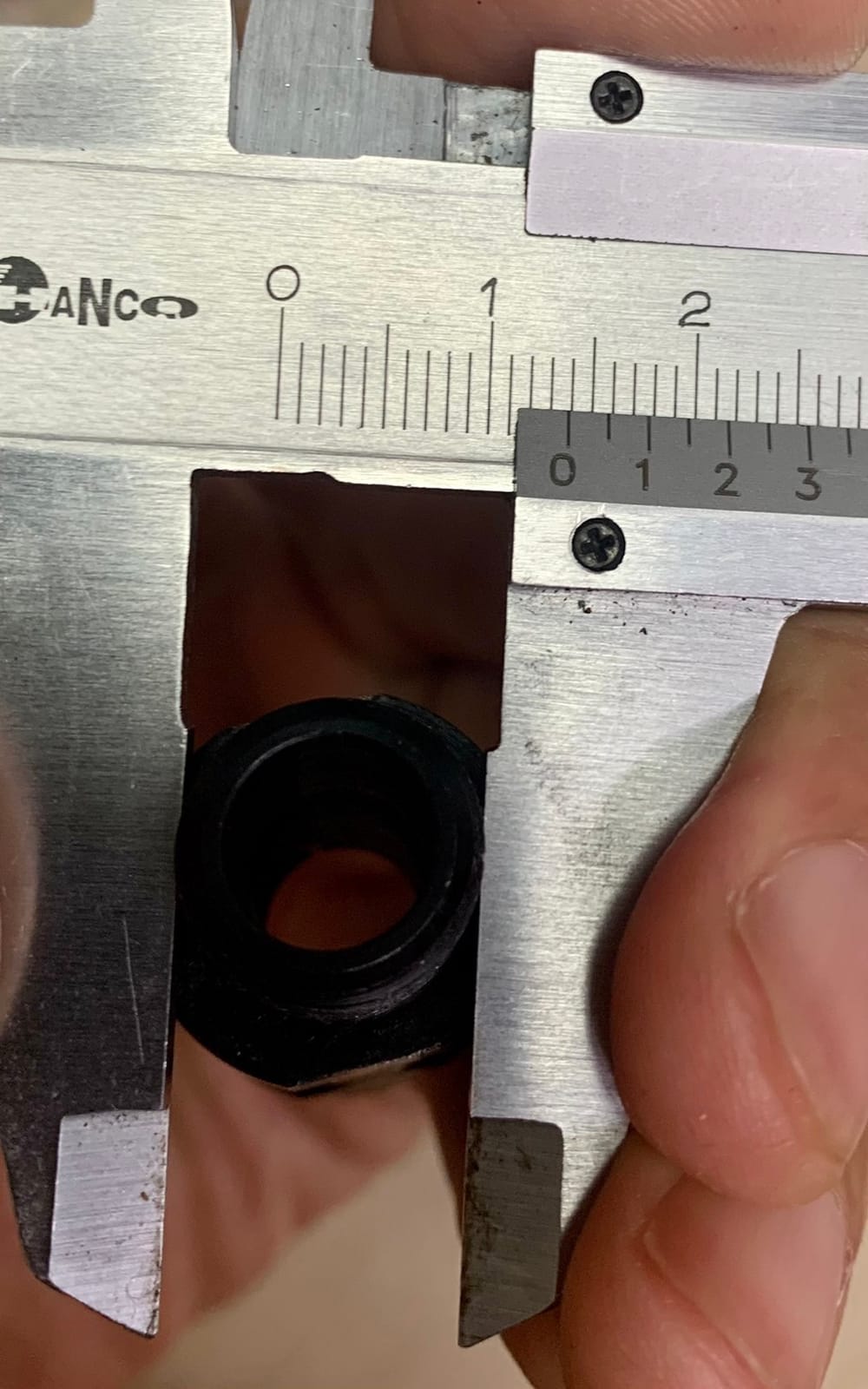
The image on the left is a “Risk” (link) product that works normally among pedal extender products.
The image on the right is from a poor quality company.
Just by looking at it, you can see the difference in the diameter of the thread circumference.
As shown on the right, the circumference of the screw thread was narrow, so no matter how hard I tightened it, it kept coming loose.
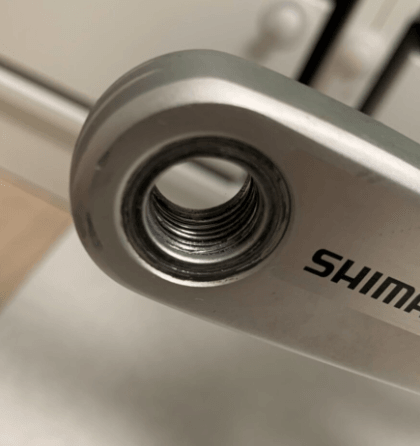
I installed a narrow threaded pedal extender and the crank broke.
There are some good, very precise pedal extenders on AliExpress, but I bought it roughly and threw away one crank.
conclusion
Most don’t care about the Q-Factor. But what if you were pedaling 80 times a minute while riding a bicycle, or 4800 times an hour, while pressing the pedals non-vertically?
It is likely to cause pain.
You can go to a fitting place and measure it precisely and calculate the desired pedal distance.
However, after fitting, it seemed that those values are important, but the most important thing is to find the optimal value by endlessly repeating corrections with your feelings.
In the case of pedal extenders, products are produced only in 16mm and 20mm. So, if you want to find the level of detail you want, it would be helpful to look at the pedals of a company called issi.
I couldn’t find the homepage link, so I’ll just write down the Instagram (Link)